What I Do Locally
I hate lawns. I think it started as a hatred of lawn work. It’s hot, loud, sweaty, stinky work that eats up your precious evening and weekend hours.
Despite hating them, I understand the appeal. There’s real pride in wrestling a lawn into shape, and in making a safe place for kids to play. A tidy lawn is a way of telling your neighbors that you’re a hardworking, responsible, civic-minded person who cares about your home and your community. A biologist might call it a true signal: short of writing a big check to a landscaping company, there’s no way to fake a well-kept lawn. I know all of that, and I hate them anyway, on an almost cellular level.
I hate them so much that when I was ready to buy my first house, I bought a cabin surrounded entirely by mature hardwoods, without a single square foot of turf. Apart from clearing leaves off the driveway in the fall, there’s nothing to maintain. There’s satisfaction in a nice-looking lawn, but for me there’s far more in letting nature simply be nature.
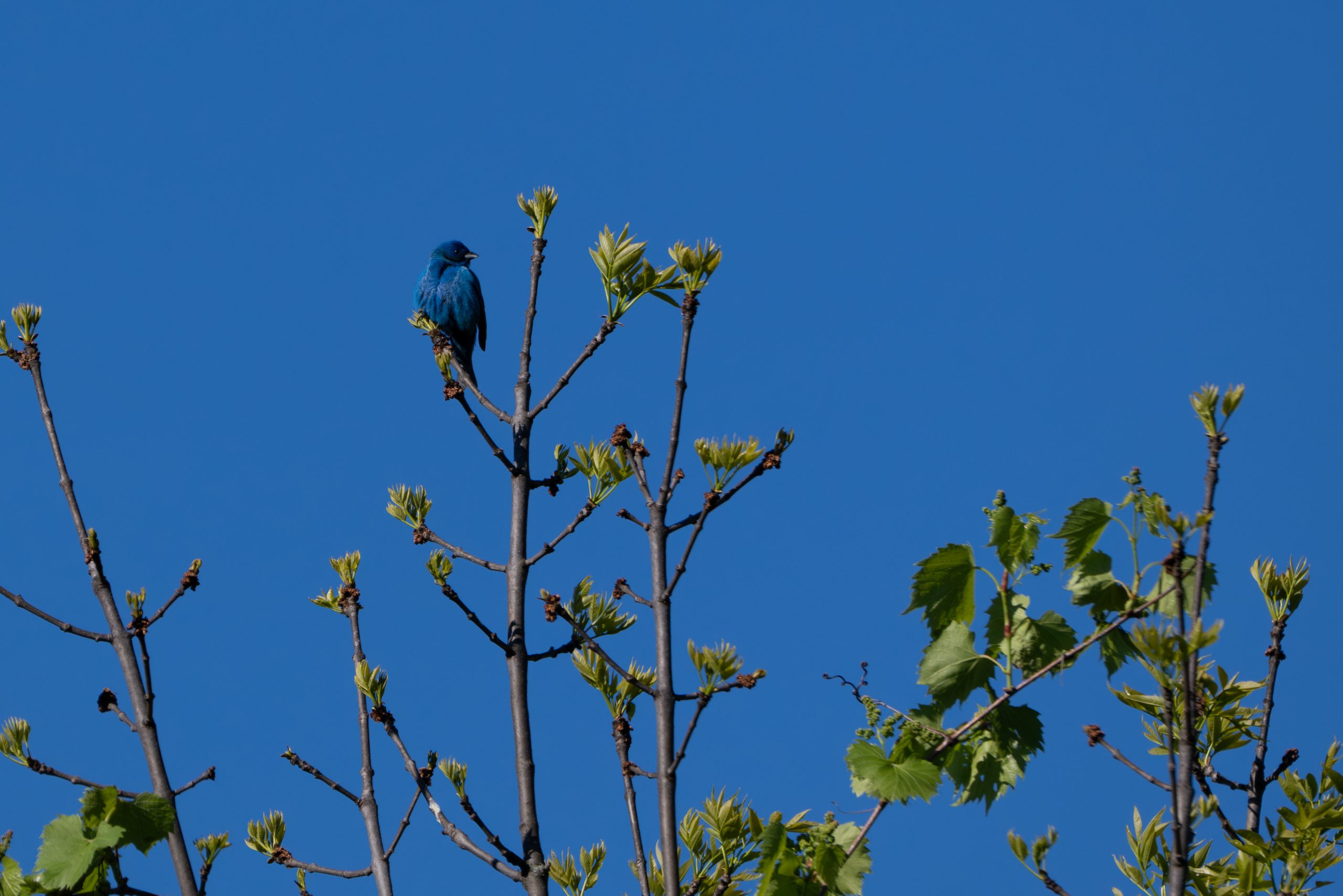
Living in the woods led me to start noticing animals: opossums, raccoons, skunks, chipmunks, and countless deer, including a few fawns born within view of my windows. Once in a great while, a fox or a coyote. My favorites, of course, are the dozens of bird species that live here or pass through on their travels. At one point my homemade, extremely nerdy bird-call recorder had logged 127 species. A few were questionable, but none were completely impossible.
I put out a bird feeder to attract more (I may have a problem). It brought in plenty of seed-eaters: sparrows, finches, grosbeaks, and the like. But what I really wanted were the insect-eaters: warblers, tanagers, cuckoos. So I did what any nerd does, and read about it.
It turns out the best way to attract insect-eating birds is to plant the natives that support native insects. In a world where insect-resistant ornamentals have become standard issue, that’s harder than it sounds. When I started cataloging the shrubs in the forest I’d assumed was completely natural, I found most of them were invasive and nearly worthless ecologically. So I started planting natives. This spring I put 48 native shrub seedlings in the ground. I’m sure the deer, the cold, and the occasional dry spell will take some of them, but I hope that, given enough time, the rest take off and feed the bugs that feed the birds whose colors I love so much.
The best part of native plants is that they free you to leave them alone. They’ve already evolved to thrive here, so there’s none of the hot, loud, sweaty, stinky work that got me hating lawns in the first place.
Beyond my own property, I’ve volunteered for the Grand Rapids Parks and Recreation department, which is always organizing park cleanups, invasive plant removals, and urban forestry and tree-planting events.
No judgment if you love your lawn. I really do get it. Just forgive me if I don’t want the kind you might have.
Curious about doing something like this where you live? Here are a few groups that can help, including a local (to West Michigan) land conservancy.